Wednesday, September 23, 2015

Frustration and Fear

What do the majority of Palestinians and Israelis think about prospects for a just and secure peace in the region? Here are some results of recent polls conducted by the Palestinian Center for Policy and Survey Research in theWest Bank and Gaza Strip and the Harry S. Truman Research Institute for the Advancement of Peace at the Hebrew University of Jerusalem:

 
After the formation of the right wing government in Israel in May 2015, 79% of Palestinians were pessimistic about the future of Israeli-Palestinian relations. 


Sixty-five percent of Palestinians said that they no longer believe a two-state solution is a practical possibility due to the expansion of illegal Israeli settlements across the occupied Palestinian territory.


Only 32 percent of Palestinians believe an independent Palestinian state can still be achieved.


An overwhelming 85% of Palestinians believe Israel’s long-term aspiration is “to annex the lands occupied in 1967 and expel their population or deny them their rights,” with only 15% believing that Israel intends to withdraw from the occupied territory. Israelis are suspicious as well: Forty-three percent think that Palestinian aspirations in the long run are to conquer the State of Israel and destroy much of its Jewish population.

On a personal level, too, each side perceives the other as a threat. Among Israelis, 56% are worried and 41% are not worried that they or their family may be harmed by Arabs in their daily life. Among Palestinians, 79% are worried and 21% are not worried that they or a member of their family could be hurt by Israel in their daily life or that their land would be confiscated or home demolished.

It is not surprising that among Palestinians, Gazans are experiencing the worst conditions and the most pessimism about the future. 

Fully half of Gazans polled said they are considering emigration from the Gaza Strip. This is the highest percentage ever recorded in these polls.


In the West Bank, however, popularity of Abbas and Fatah has improved, and people show support and satisfaction with the Palestinian Authority’s new membership in the International Criminal Court.


Nevertheless, cynicism about government remains high. Seventy nine percent of Palestinians believe that corruption exists in Palestinian Authority institutions. Only 33% say people in the West Bank can criticize the PA without fear. 


Most troubling for the future of the region, Palestinian support for armed resistance to Israel has risen from 36 percent three months ago to 42 percent today, with a startling 57 percent now supporting a return to an armed intifada, or uprising. 



Still, support for nonviolent resistance remains high. An overwhelming majority of Palestinians – 86% -- support the campaign to boycott Israel and impose sanctions on it, and 64% believe that the boycott of Israeli products will be effective in helping to end the Israeli occupation.


Two thirds of the public support Hamas-Israel indirect negotiations over a long term Hudna, or truce, in return for ending the siege over the Gaza Strip.

But a majority believes that these negotiations will not succeed.


Thursday, September 10, 2015

An Open Letter to the American Friends Service Committee

From: Palestine Israel Action Group (PIAG) 
Re: AFSC’s position on the expulsion of Alison Weir from the U.S. Campaign to End the Occupation

The Context: The U.S. Campaign to End the Israeli Occupation is a coalition of social justice groups working for a just peace in Israel/Palestine. The American Friends Service Committee (AFSC), the social justice "arm" of the Religious Society of Friends, is a member of the U.S. Campaign, and in that capacity, agreed to the expulsion of Alison Weir and her organization, If Americans Knew, from the coalition The reason, apparently, was that an unnamed individual or organization within the coalition had prepared a dossier of Weir's actions, some dating back five years or more, which, in the accusers' opinion, did not sufficiently contest the racism or anti-Semitism of the individual hosting her talks. The idea of discrediting a long-time activist's effectiveness by seizing on a "flaw" in her work was worrisome not only to PIAG, but to many other defenders of Weir's activism. Mike Merryman-Lotze, speaking for AFSC, defends its actions by saying that as anti-racist activists, we "must" confront oppression directly wherever we find it. It has even been insinuated that PIAG members' questioning of AFSC's position is racist in and of itself. This open letter is a reply to these claims. More details of the controversy can be found here and here.

As a Quaker organization, PIAG has always worked against all forms of oppression. 


Individually and/or collectively, we are members of anti-racism groups such as the U.S. Campaign to End the Occupation, Jewish Voice for Peace, and #Black Lives Matter.


Ann Arbor Friends Meeting
As a subcommittee of the Peace and Social Concerns Committee of Ann Arbor Friends Meeting, PIAG
has engaged in educational efforts with our Monthly and Yearly Meetings over the last twelve years, and have convinced both groups to support the Boycott, Divestment and Sanctions movement.


We have distributed over a half million map cards nationally and internationally showing the loss of Palestinian lands to Israel’s Occupation.

In short, we are knowledgeable, seasoned activists who are strongly committed to working for justice and equality wherever that work may lead us.

It is in the spirit of our anti-oppression work that we take issue with the message in AFSC’s online communication, IMPACT; specifically, the post by Mike Merryman-Lotze on AFSC’s Acting in Faith blog, “Palestine Activism in an Anti-Racism Framework” (8/10/2015). We find a disturbing disconnect between the statement: “At AFSC, our work is guided by the Quaker belief that all people are equal in the eyes of God” and the participation of AFSC in the denunciation of one particular person, Alison Weir, and her longstanding work for justice inIsrael/Palestine – work which PIAG deeply respects.

We are also troubled by the insistence that “we” (that is, we presume, Quakers engaged in anti-racism work) “must” act in particular ways, choosing certain tactics, methods, analyses, and goals over others. We cannot agree, as Quakers, that everyone must see the truth in the same way, analyze human behavior in the same way, and agree to work according to principles put forth by any social justice organization, however well-intentioned.
George Fox 

Quakerism's founder George Fox was pretty clear about the idea that everyone has the ability to listen to the voice of God, to think about the meaning of that voice, and above all, to speak for themselves.

As Fox told the assembled at Ulverston steeple-house, “You will say ‘Christ saith this, and the apostles say this,’ but what canst thou say? Art thou a child of the Light, and hast thou walked in the Light, and what thou speakest, is it inwardly from God?"


Early Quaker Meeting
This message was one of the earliest and most radical challenges to the dogmatism and demands for obedience required by the Christian Church in 17 th century England. The statement was so compelling that it later formed the basis of Quakerism: There is no dogma. There are no “musts” in Quaker belief and practice. It is enough that Quakers be inspired by the values of simplicity, peace, integrity, community, and equality, and that we work to incorporate these abstract, but profound Quaker values into our lives and the lives of others as we see fit.


We agree that anti-racism efforts that counter prejudice and bigotry on every possible occasion can be meaningful work. We agree that oppressions are linked and widespread and that opposing only one form of bigotry may not be enough. But we do not agree that everyone must accept these insights as the only way to see and be guided by the light. As Quakers, we strive for inclusion of ideas and perspectives. We have faith in Quaker process in resolving disagreements, rather than removing individuals and groups from the family when their beliefs and practices threaten our vision of the truth.

We do not dispute the “right” of the U.S. Campaign to End the Occupation to remove any member of the group as the leadership sees fit. But we have seen the effects of that removal: fear and silencing (“Who among us will be next?”) discord and schism, and a loss of focus on Palestinian freedom. Unfortunately, as we have come to understand, righteous zeal creates its own oppression.

PIAG continues to promote vigorous, open debate, a multitude of paths toward justice, and a focus not on transgression, but on the Inner Light, the spirit of the Divine that resides in every human soul.


Tuesday, August 25, 2015

Water is a Human Right

In Stockholm at the end of August, World Water Week focused on the needs of impoverished communities for clean water – or any water at all. A United Nations report in March said the world faces a 40 percent shortfall in water supplies in the next 15 years due to urbanization, population growth and growing demand for water for food production, energy and industry. But the root cause of water shortage is often political. Occasionally, it is deliberately inflicted.

Swimming pool in Eilat
In the West Bank, while Israelis water their lawns, irrigate crops and swim in Olympic-sized pools, Palestinians living a few kilometers away are sweltering and thirsty. A report from the United Nations found that the average Israeli settler uses 300 liters of water per day. But Israeli restrictions ensure that the average Palestinian in the occupied West Bank gets only about 70 liters, well below the 100 liter daily amount advocated by the World Health Organization.


Watering the stock: Palestine
Despite its location in a region thought to be perennially dry, Israel-Palestine actually has ample natural freshwater resources in the form of underwater aquifers and the Jordan River. Palestinians in the West Bank and Israeli settlers live in equal proximity to these resources, which should allow for equal consumption. But ever since its foundation, Israel has controlled the water supply for the region, first by military edicts, and later through Mekarot, the Israeli national water company. 

To this day, Israel requires Palestinians to obtain permits from the military to build new water infrastructure. If they build new wells, springs, or even rain-collecting containers without Israeli permission, soldiers confiscate or destroy them, often without prior notification.

Settlers vandalize Palestinian water tanks
Israeli settlers, emboldened by government indifference, cruelly vandalize Palestinian community water storage tanks. Fifty-six water springs near Israeli settlements have become the target of “systematic settler activities.”

Even when Palestinians attempt to go through the ‘proper’ Israeli channels, they’re met with innumerable obstacles. Israeli regulatory organizations have created a bureaucratic nightmare for West Bank residents attempting to acquire permits to either build new instillations or repair the region’s infrastructure.

The most striking inequality lies in the division of the Mountain Aquifer, the only underground water source that Palestinians in the West Bank are allowed to access. Despite it being the sole water source for the territory, Israeli regulations ensure that 80% of the rain that falls on the West Bank flows underground to Israel, while Palestinian extraction is limited to 20% of the aquifer’s total capacity.

Palestinian boy totes water for his family
As for Gaza, the UN estimates the crowded, blockaded region will be uninhabitable by the year 2020 if the current water restrictions continue. Although the West Bank is relatively well-off in comparison, the water crisis there has resulted in severe economic hardship for hundreds of thousands of Palestinians, a situation that is not conducive to long-term stability in the region.
Water, a life-giving natural resource, is both a human need and a human right. Whether in Detroit, or California, or Palestine, deliberate policy should not deprive the most vulnerable 
of a region’s ample resources.


References:
Shakir, L. (2015, August 24).  Palestine: “Dying of Thirst.” The Drought is Deliberately Inflicted by Israel. Global Research. http://www.globalresearch.ca/think-californias-drought-is-bad-try-palestines/5471179  

United Nations Office for the Coordination of Humanitarian Affairs occupied Palestinian territory. (2012, March). Special Focus: How Dispossession Happens. https://www.ochaopt.org/documents/ocha_opt_springs_report_march_2012_english.pdf

Vatican Radio. (2015, August 24). Stockholm World Water Week Focuses on Development. http://en.radiovaticana.va/news/2015/08/24/stockholm_world_water_week_focuses_on_development/1167141

Tuesday, July 28, 2015

"No Way To Treat A Child"


Each year, an estimated 700 Palestinian children are prosecuted in two Israeli military courts operating in the West Bank. Their crime? In most cases, simply throwing stones. According to UNICEF and Defense for Children International, Palestinian children picked up by the IDF are routinely ill-treated, even tortured, with impunity.

They may be pulled out of bed in the middle of the night by heavily armed soldiers. They may be blindfolded and handcuffed, separated from their parents, denied access to a lawyer, and threatened with physical and emotional abuse, including violence to family members. They may be placed in isolation, beaten, choked, and coerced into a confession in Hebrew, a language they do not understand. 


This treatment is not carried out by a few “bad apples,” but “appears to be widespread, systemic, and institutionalized,” according to a 2013 UNICEF report. 

This abuse must stop.


Why single out Israel for its mistreatment of children in military detention? 

Because we expect “the most humane army in the world” to do better. And because Israel’s practice of routinely trying children in military courts is unprecedented. As UNICEF says: “It is understood that in no other country are children systematically tried by juvenile military courts that, by definition, fall short of providing the necessary guarantees to ensure respect for their rights.”


International civil society is coming together to say: “NO WAY TO TREAT A CHILD.” The campaign is supported by AFSC and FCNL as well as Jewish Voice for Peace, Christian Peacemaker Teams, Friends of Sabeel North America, and many other human rights organizations.


Even U.S. Congress members are taking action. In a letter to Secretary of State John Kerry, nineteen Congress members urged the Department of State to “elevate the human rights of Palestinian children to a priority status in our bilateral relationship with the Government of Israel.” Citing UNICEF’s “profoundly disturbing” report regarding the “cruel, inhuman, and degrading treatment and punishment” of Palestinian children in Israeli military detention, the officials emphasized that “progress to ensure Palestinian children’s rights are not abused is in the interest of the U.S., Israel, and the Palestinian people.”

You can add your voice to the “No Way To Treat A Child” campaign by logging on to www.nowaytotreatachild.org/ There you can read the letter to Secretary Kerry and find out who signed it – and who didn’t. You can find talking points, download graphics, watch videos, and read case studies of individual children. With this information you can write your members of Congress, post information on email, Facebook and Twitter, or talk to your friends over the garden fence. 

Children’s rights are human rights. Palestinian children need our advocacy.


Thursday, June 25, 2015

Assault on Gaza, One Year Later


"Operation Protective Edge"
 One year ago, on July 8, 2014, Friends were horrified to learn that Israel had launched an all-out assault on Gaza resulting in over 2100 Palestinian dead and 11,000 wounded. The U.N. reports that 1000 wounded children will suffer a life-long disability. At least 142 Palestinian families lost three or more members killed in a single Israeli attack, and nearly 1500 children were orphaned.

Flooded street in Gaza

In addition to the human devastation, “Operation Protective Edge” destroyed homes, schools, municipal buildings, and power, water, and sewer systems – the basic infrastructure so many of us take for granted. Israeli attacks caused widespread damage to Gaza’s already frail and dilapidated electrical grid, run down and in disrepair after nearly 9 years of siege and blockade. In last summer’s attack, Israel intentionally bombed Gaza’s only power plant, knocking it out of commission indefinitely, prompting Amnesty International to condemn the attack as an act of “collective punishment” against the entire population. Without electricity, water treatment plants could not function, leading to the release of raw sewage into open pools, farmland, and the Mediterranean Sea. By last August, 15 tons of solid waste had leaked into the streets of Gaza.

How are the living conditions in Gaza today? In the 11 months since a ceasefire agreement was signed between Israel and the Palestinians, Israel has refused to allow in the building materials needed to reconstruct Gaza’s infrastructure. Tens of thousands of Palestinian families continue to live among the rubble of their houses without electricity or running water. Aid agencies report that malnutrition is spreading.

World War II, Montebourg, France
Imagine the ruins of World War II in Europe: cities reduced to rubble, children hungry and homeless, families decimated. Like those Europeans, Palestinians are resilient, creative and ready to work to rebuild. The children of Gaza still have hopes and dreams for their future. Take a look at this sweet little video of Palestinian children against the backdrop of devastation: 

WWII Marshall Plan
Yet unlike post-WWII Europe, where the U.S. launched a massive Marshall Plan to help countries on both sides of the conflict rebuild, Gaza remains under a strict military blockade. Its export sector has virtually disappeared and the manufacturing sector has shrunk by 60%. Even prior to the assault, Gaza’s unemployment rate was 46% -- the highest in the world. 35% of the available agricultural land is now unsafe for Gazans to use. 97% of the water supplied through the municipal networks is still unfit for human consumption.

Fortunately, the United Nations Relief and Works Agency for Palestinian Refugees (UNRWA) has been delivering aid through it all to Gaza as well as to Palestinian refugees in the West Bank, Syria, Lebanon and Jordan – five million in all). Despite incredible challenges, UNRWA is providing schools and teachers, primary health care, emergency food aid, psychological counseling, vocational training and microfinance loans, and is leading the efforts to import vital construction materials. We can support UNRWA online: www.unrwausa.org


Yet the people of Gaza do not want to rely on this critical international aid for the long term.  They’re not even hoping for a Marshall Plan. What will help Gaza the most is our work toward the larger goals: peace and security throughout the region, the resettlement of refugees, an unconstrained economy, the reopening of schools and hospitals, just compensation for confiscated lands and properties, an end to racist assaults and illegal imprisonment – in short, a return to “ordinary life.”  Who would ask for more – or less? 

Tuesday, May 19, 2015

Where Movements Converge

Question: What do environmentalists, labor unions, family farm supporters, consumer groups, Internet freedom advocates, and Palestinian human rights organizations have in common?

Answer: Opposition to Fast Track authority for the Trans-Pacific Partnership

In an unprecedented show of unity, over two thousand organizations, including the progressive Jewish Voice for Peace, have signed a joint letter to the U.S. Congress urging opposition to Fast Track legislation that has been making its way through the legislature this spring.

Randi Weingarten, president of the American Federation of Teachers, offers the reasons why so many progressive groups are leery of fast track authority for the TPP: “While we are not currently permitted to see the terms of the new trade deal, what we do know is the Fast Track process enables trade deals that hurt everyday Americans and stack the deck in favor of corporations. It limits public and congressional oversight and does not allow effective enforcement. We need trade policy that strengthens our country — ensuring the rights of workers, and protecting consumers and the environment. We need a democratic and transparent trade process that offers a fair shake for American workers. Fast Track fails these standards and should be rejected.”

But Fast Track authority for the TPP would not only threaten the quality of life of ordinary Americans. Amendments have been tacked on – amendments backed by AIPAC, the powerful right-wing “pro-Israel” lobby that would discourage and penalize boycotts against Israel and erase the distinction between Israel and the Palestinian territories it occupies. 

As Jewish Voice for Peace federal policy organizer Rabbi Joseph Berman explains: “JVP opposes ‘Fast-Track’ not only because it is anti-democratic and bad for workers and the environment, but because it will also legitimize support for illegal Israeli settlements and impede efforts to apply non-violent pressure to hold Israel to the standards of international law and human rights norms.” In fact, these amendments make discouraging the BDS campaign “one of the principal U.S. trade negotiating objectives.”

These anti-BDS amendments suggest common interests between those who would grant ever more authority to powerful corporations and those who would privilege Israeli control at the expense of Palestinians. This fact alone should provide us with food for thought.

Yet the attempt to delegitimize BDS through binding international legislation also suggests that the BDS movement has grown to become a powerful nonviolent threat to the Israeli right. Public opinion is changing.

Says JVP: Across the U.S., millions of people inside and outside of the Jewish community are taking a long hard look at Israel's human rights abuses. Elected leaders who'd been too scared to speak out are raising their voices.

Academics and students are building power on campuses, where once it simply wouldn't have been possible.

Even Pope Francis has added the moral voice of the Vatican to the fray by signing a treaty that recognizes the "state of Palestine."


Our work is bearing fruit. The times they are a-changing.

Tuesday, April 28, 2015

NEW AFSC Screening Tool

Good news! The American Friends Service Committee has launched an online tool for screening companies that are complicit in ongoing severe violations of human rights and international law in Israel/Palestine. One may be surprised to find who is profiting from the suffering of others. Please have a look at www.afsc.org/investigate

Many socially responsible funds screen out major weapons manufacturers and companies with poor records of environmental or labor protection. However, corporate complicity in severe human rights violations in Israel/Palestine is often not taken into account explicitly in these considerations. The new tool developed by AFSC identifies specific violations, lists relevant public campaigns targeting these companies, and provides information on initiatives taken by responsible investors around the world to influence and change that corporate behavior.

To check the status of your mutual fund investments go to the fund providers' website to obtain the latest report with a list of holdings and scan the report with our tool. Once you have completed your initial scan you can contact your fund providers to ask for an updated list of holdings and to share with them your specific concerns.

If your fund already advertises itself as socially responsible, ask your money managers if they screen for human rights abuses and violations of international law in Israel/Palestine. Suggest they use our tool to identify corporate violators and incorporate our information into their decision making process. Information about corporate violations in Israel and the occupied Palestinian territory has not been readily accessible to investors until recently.

Finally, it is important to note that some of the companies engaged in problematic business practices in the occupied Palestinian territories are also involved in problematic practices elsewhere. As a result, a number of socially responsible funds are already Occupation-Free, meaning they currently have no investments in the main corporate violators in Israel/Palestine.

The following is a list of socially responsible mutual funds whose latest annual reports are Occupation-Free according to AFSC’s scans. However, this does not mean that any of these funds have actively screened for occupation-related violations, or that they will remain Occupation-Free throughout 2015.

American Trust Allegiance Fund (ATAFX)                   
Appleseed Fund (APPLX)
Ariel Fund (ARGFX)                                                    
Ariel Appreciation Fund (CAAPX)
Ariel International Fund (AINTX)                                 
Ariel Global Fund (AGLOX)
Azzad Ethical Fund (ADJEX)                           
Gabelli SRI Fund (SRIGX)
Green Century Balanced Fund (GCBLX)                     
Neuberger Berman Socially Responsive Fund (NBSRX)
New Alternatives Fund (NALFX)                                
Parnassus Endeavor Fund (PARWX)                           
Parnassus Fund (PARNX)
Walden Asset Managment Fund (WSBFX)                  
Portfolio 21 Global Equity Fund (PORTX)
Walden Midcap Fund (WAMFX)                                
Walden Equity Fund (WSEFX)


Friday, March 20, 2015

Bad News? Or Good News in Disguise?

After these elections
There will be
No peace-minded government.

After these elections
There can be
A strong
Peace-minded opposition
Of Jews and Arabs

The struggle
Has just begun

So goes a Gush Shalom (Peace Bloc) advertisement that appeared in the Israeli newspaper Ha’aretz on March 20, 2015, just after the results of the election were announced. Prime Minister Benjamin Netanyahu’s Likud Party had been declared the winner in an exceptionally close race with the Zionist Union, a centrist coalition led by Labor Party leader Isaac Herzog.

In a last-ditch attempt to gain the support of far-right voters, Netanyahu had made a fateful promise: As long as he serves as prime minister of Israel there will be no independent Palestinian nation. 


Perhaps even more troubling, Netanyahu had racialized the political process by warning Jews that Israeli Arabs were turning out “in droves” to cast ballots. 

His strategy seems to have worked. Right-wing, ultra-nationalist voters propelled the Likud party to an overwhelming victory.

Are these election results bad news or good news for a just peace in Israel/Palestine? On the one hand, Netanyahu’s promise to block a two-state solution scuttles any attempt at a U.S.-brokered peace process, and openly declares what Palestinians had suspected all along: Israel has no interest in easing the suffering of Palestinians in any meaningful way, much less ending the Occupation. 

But some Palestinians see this bad news as not so bad after all. The open declaration that they no longer have a negotiating partner could strengthen their case for full statehood and recognition in the United Nations. Already, Palestinians have j oined UNESCO and the International Criminal Court, and they are studying the possibility of signing a host of international treaties, increasing the credibility of their bid for a nation of their own.

In addition, the fact that a solution will not be found through the standard political process may open the way for a "strong, peace-minded opposition of Jews and Arabs" to work together with their international allies more closely and effectively. Nonviolent tactics such as the Boycott Divestment and Sanctions campaign are now in an even stronger position to challenge Israeli political and economic interests that benefit from maintaining the status quo. The Obama administration, already furious at Netanyahu's attempts to derail U.S. talks with Iran, might be persuaded to stop vetoing Palestinian efforts to engage the United Nations. 

And for Quakers with their growing commitment to boycott and divestment, more creative action may now be worth exploring. As Gush Shalom says, "The struggle has just begun. 

Wednesday, February 18, 2015

Not 2-states, Not 1-state -- a BINATIONAL Solution


When Israeli activist Jeff Halper embarked on a cross country tour of Canada recently, he spoke of a potential solution to the Israel-Palestine conflict: the formation of a bi-national state like Canada, a bi-lingual, bi-cultural partnership where everyone has equal rights as citizens, yet both “nations” retain a 
measure of self-determination.

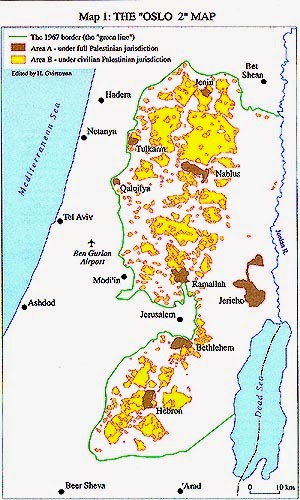
Already there is a single de-facto government in the region, Halper pointed out. Israel has created one state under its complete authority, establishing a common currency, a single army, a single system for the distribution of water and electricity, a single system of law. The region is already bilingual; many Palestinians have learned Hebrew (often in Israeli jails) and many Israelis understand Arabic. The problem is, it’s a highly undemocratic arrangement, with Palestinians restricted at every turn, squeezed into 38% of the occupied territories, which themselves comprise only 22% of their original lands.


But what of the two-state solution, a compromise preferred by a majority of both Israelis and Palestinians and indeed, by Halper himself? The Israeli government has never seriously considered such an outcome, Halper says, and by now, the idea is no longer viable. With Palestinian lands now fragmented into more than 70 disconnected islands and dotted with more than 200 illegal settlements linked by 28 major highways, many barred to Palestinians, Israel has ensured that the West Bank is no longer detachable territory. By imposing a matrix of control and massive, permanent “facts on the ground,” Israel has divided the region so completely that even territorial swaps cannot create the contiguous geography necessary for two viable states.

So if there is already a single state, the task would be simply to transform it into a true democracy. Everyone would have the right to live, work, and travel where they choose. There would be no need for land swaps, no demolition of homes, no policing of borders, and no fear of attack by the scary people behind the “separation wall.” All barriers and checkpoints would be removed, all confiscated lands returned, all segregated housing abolished. 


Constraints on Palestinian trade and commerce would be lifted. Water resources would be equitably distributed, and with the help of international donations, damaged infrastructure would be restored and improved. Children could go to school without fear.


With the binational state’s electoral system open to all, the two peoples, so long separated from one another, would work together to ensure that the rights of all are protected and each “nation” can maintain its own identity, its own sense of common history, its own customs, languages, and religious practices within a geographic and civil structure that ensures equality and celebrates the contributions of both groups.


Idealistic? Certainly. Too complicated? No, such a radical transformation has been worked out before, notably in South Africa – though only after vigorous world pressure forced the government to shed its suffocating apartheid mode. Dangerous? Perhaps. Change is not without risk, especially for the occupying power. But this new vision, if entered into with good will and a sense of historical inevitability, could have the potential of creating a true democratic model for the Middle East, and indeed, for the world.   

Here’s a link to Halper’s very engaging talk, which mostly focusses on the demise of the two-state solution. Most interestingly, Halper discusses who benefits from the permanent state of hostility, and warns that the problems that beset the wider Middle East can only be solved after the Israel Palestine issue is settled fairly and equitably. 

Friday, December 19, 2014

"Unconscionable Delay" in Gaza Reconstruction


The American Friends Service Committee (AFSC) and Friends Committee on National Legislation (FCNL) are raising serious concerns about the worsening humanitarian crisis in Gaza. The two Quaker agencies have joined other religious and secular organizations in a letter to Secretary of State John Kerry and Dr. Rajiv Shah of the U.S. Agency for International Development, urging action.

The crisis caused by the tremendous destruction of homes and infrastructure in July is now compounded by severe flooding, the onset of winter, and an unconscionable delay in the movement of reconstruction materials across the Israeli-Gaza border.

Quoting from the letter: “Despite the much-touted Gaza Reconstruction Mechanism (GRM) . . . just 2.9 percent of the materials needed for reconstruction and recovery plans have entered thus far, with fewer reconstruction materials entering Gaza in November than over the past three months. . . The Popular Committee for Monitoring the Reconstruction of the Gaza Strip estimates that at the current pace it will take at least 20 years to rebuild the Gaza Strip.” This “clear result of policy inaction and failure,” the letter continues, is repairable if certain steps are taken. The organizations ask, among other things, that:

·        the U.S. increase its financial commitment to the reconstruction effort, and ensure that these funds are disbursed immediately to relevant United Nations agencies and NGOs
·        the U.S. urge Israel to lift the blockade of Gaza, allowing full freedom of movement of people and goods and lifting restrictions on import and export, “a crucial step for recovery and development of the local economy”
·        the U.S. urge Egypt to open the Rafah crossing
·        the U.S. work with the U.N., Israel, and the Palestinians to “resolve problematic aspects of the Gaza Reconstruction Mechanism,” such as requiring homeowners receiving building materials to register in a database accessible to Israeli intelligence agencies
·        the U.S. help ensure that “Israeli companies that operate in settlements or are complicit in violations of international humanitarian law do not profit from reconstruction efforts”

We are heartened to see that Quaker organizations have joined the United Methodist Church, the United Church of Christ, the Presbyterian Church, the Mennonite Central Committees in the U.S. and Palestine, among many others, in proposing specific ways that the U.S. can work to ease the suffering in Gaza. Friends can respond personally by writing a letter to Secretary Kerry and President Obama; posting on social media or telling a friend about the situation in Gaza; and/or by donating badly needed funds for emergency relief to the United Nations Relief and Works Agency (UNRWA) Gaza Appeal. 

We are inspired by the resiliance of the Palestinian people